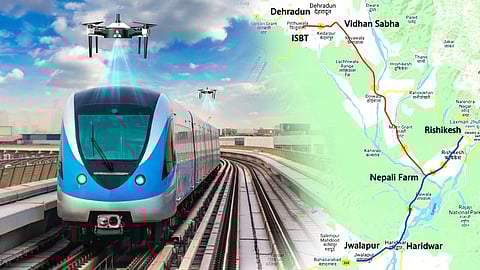

The Uttarakhand government has taken major steps to modernize urban transport in the state. Under the direction of Chief Minister Pushkar Singh Dhami, a high-level review meeting was held to speed up important transport projects in Dehradun, Haridwar, and Rishikesh.
The meeting was chaired by Housing Secretary Dr. R. Rajesh Kumar and attended by senior officials of Uttarakhand Metro Rail Corporation.

Dehradun city will soon see the development of a 31.52 km long e-BRTS (Electric Bus Rapid Transit System) corridor. The first corridor will run from ISBT to Raipur and will include 35 stations. Officials have conducted a joint site inspection of 17 proposed stations between ISBT and Mussoorie Diversion.
This project aims to reduce traffic congestion in the capital, especially as the population continues to grow. The government has said the project will be given priority.
In Haridwar, an integrated ropeway project has been proposed connecting DDU Parking, Chandi Devi, Mansa Devi, and a multimodal hub. The project will include four corridors, 21 stations, and cover 20.73 km. This is expected to greatly improve traffic management, especially during peak pilgrimage seasons.
A Personal Rapid Transit (PRT) system has also been proposed to improve last-mile connectivity.
The proposed ropeway from Triveni Ghat to Neelkanth Temple in Rishikesh has received key approvals. The application for Stage-1 forest clearance has already been submitted. This ropeway will make travel easier for pilgrims and reduce road traffic in the hilly region.
Officials also discussed the importance of proper parking management under the Uttarakhand Car Parking Policy 2022. The Housing Secretary stressed that without proper parking planning, no public transport system can work effectively.
These projects signal the beginning of a new phase in Uttarakhand’s urban transport system. The government aims to create a modern, safe, and eco-friendly transport network that will benefit residents, tourists, and pilgrims alike.
For the people of Dehradun and nearby cities, these developments could mean smoother travel, less traffic, and better connectivity in the coming years.
