
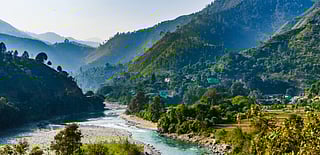
When winter settles over Dehradun, the city slows down in the most beautiful way. The air turns crisp, the hills wear a light haze, and the streams — usually hidden under summer greenery — begin to reveal their true character. These seasonal and perennial streams have shaped Dehradun’s geography, neighbourhoods, and memories for decades. In winter, their gentle flow, exposed riverbeds, and sunlit banks make them perfect for peaceful walks, photography, or simply pausing to breathe.
Here’s a look at some of Dehradun’s most familiar streams and why winter is the best time to rediscover them.

Flowing quietly along the eastern edge of Dehradun, the Rispana is one of the city’s most recognisable streams. In winter, the water level drops, revealing pebbled banks and dry patches where locals often stop to soak in the sun. Early mornings here are especially serene, with mist hovering over the water and birdsong filling the silence.
Running parallel to the Rispana, the Bindal River has long been part of Dehradun’s everyday life. Winter transforms it into a calmer, more approachable stream. Without monsoon rush or summer debris, its flow appears clearer and gentler — making it a familiar winter companion for walkers along nearby roads.
Though larger than a typical stream, the Tons feels deeply connected to Dehradun’s winter landscape. The colder months bring clearer views of its rocky bed and surrounding hills. Picnics, quiet reflection, and riverside walks feel more intimate here when the crowds thin out and the water flows steadily but softly.
Often overlooked, the Suswa quietly supports agricultural areas around Dehradun. In winter, when fields turn golden and the river flows gently, its surroundings feel calm and pastoral. It’s the kind of place that reminds you why Dehradun has always been called a valley, not just a city.
A lifeline for villages around Dehradun, the Song River becomes particularly striking in winter. The reduced flow reveals wide stretches of stones and sand, perfect for long walks under pale winter sunshine. The silence here is broken only by flowing water and distant village sounds — a reminder of Doon Valley’s rural roots.
Located near the Dehradun–Paonta Sahib route, the Asan River is best known for the Asan Conservation Reserve. Winter turns this area into a haven for migratory birds, making it one of the most rewarding seasonal experiences near the city. Crisp mornings by the river, with flocks of birds resting on the water, feel almost meditative.
Winter reveals what summer hides. Lower water levels expose the natural structure of these streams — stones, curves, banks, and crossings that define their character. The weather is pleasant enough for long walks, and the absence of heavy rainfall makes the surroundings safer and cleaner. More importantly, winter allows Dehradunites to reconnect with these waterways at an unhurried pace.
